
 By admin
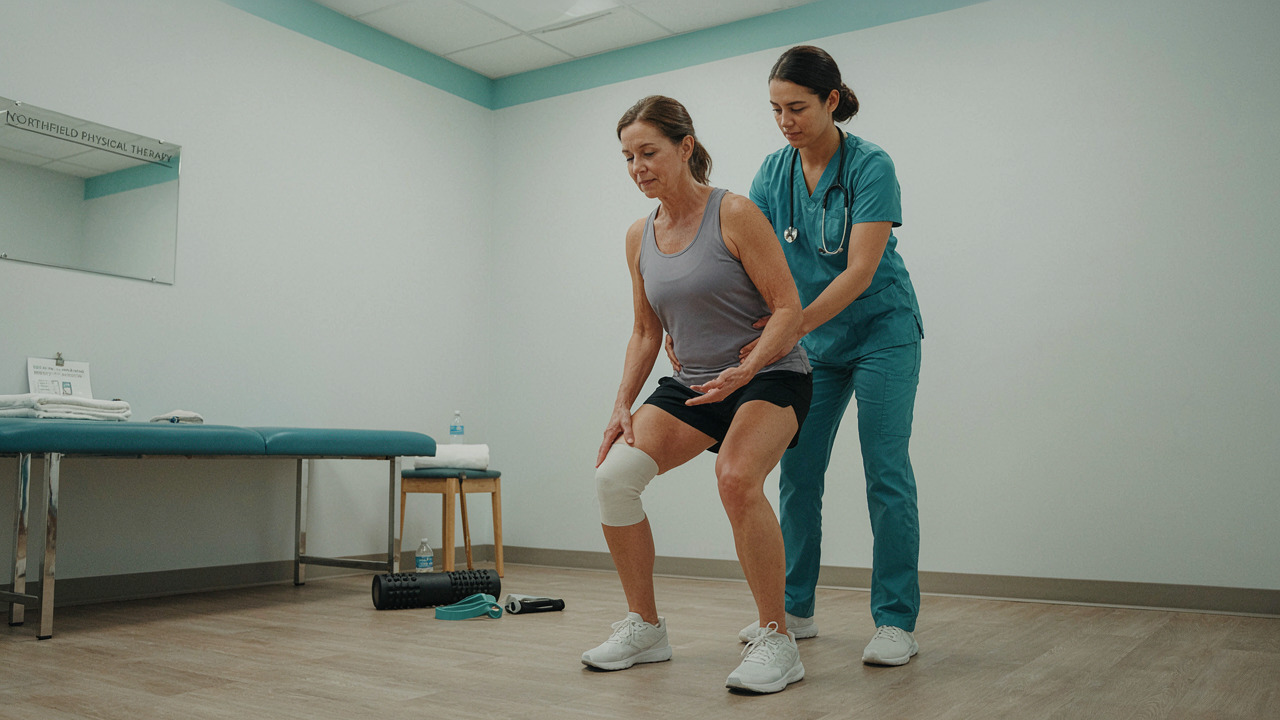
Knee pain can come from arthritis, overuse, meniscus tears, ligament sprains, or tendon problems. Physical therapy is a common first step because it can reduce pain and improve strength without surgery.
Common causes of knee pain
- Osteoarthritis
- Patellofemoral pain (pain around the kneecap)
- Meniscus injuries
- Ligament sprains such as the ACL or MCL
- Tendon irritation from overuse
- Recovery after knee surgery or replacement
How physical therapy helps
Your therapist finds out why your knee hurts, which often involves weakness in the thighs and hips, tight muscles, or how you load the joint. Treatment usually includes:
- Strengthening for the quadriceps, hamstrings, glutes, and hips
- Flexibility and mobility work
- Balance and movement training
- Guidance on activity, footwear, and pacing
- A home program to keep progress going
Exercises commonly used
Depending on your condition, a therapist may use straight leg raises, shallow mini squats, step-ups, and bridges. The right exercise and amount depends on your knee, so get a plan that fits you.
Tips for protecting your knees
- Build leg and hip strength gradually.
- Increase activity slowly rather than all at once.
- Wear supportive shoes that fit well.
- Maintain a healthy weight, which reduces load on the knees.
- Warm up before sport and cool down after.
When to see a doctor
See a doctor promptly if you:
- Cannot put weight on the leg
- Have a knee that locks or gives way
- Notice a large swelling, redness, or warmth with fever
- Have calf pain or swelling, which can signal a blood clot
- Hurt your knee in a serious fall or accident
Frequently asked questions
Can physical therapy help knee arthritis? Yes. Strengthening and movement programs are widely recommended to reduce pain and improve function.
Do I need surgery for knee pain? Not always. Many knee problems improve with therapy, but some injuries need surgery. Your doctor can advise.